How to Raise Confident Kids and Build Child Self-Esteem
Published on
June 23, 2026
Author
Samia Haddad
Project Writer | Formerly a dedicated volleyball player during her university years, Samia seamlessly integrated holistic approaches into her lifestyle to maintain peak physical and mental health. Her disciplined mindset, honed on the varsity court, persisted beyond graduation, driving her passion for research into the intricate connections between the body and mind. Now, as a writer for ThinkHealth and Wellness, Samia shares her personal journey and well-honed routines, offering valuable insights into holistic well-being. Through her unique experiences and commitment to a healthy lifestyle, Samia contributes to the platform's mission of providing comprehensive and inspiring content for individuals seeking natural health alternatives.
Can music and movement help fine motor skills?
Yes—finger plays, clapping games, and dance routines that use hand gestures all help. Combine rhythm and repetition for deeper learning.
How can educators encourage home practice?
Send home simple activity ideas, kits, or worksheets. Offer short instructions and encourage family involvement. Regular practice builds lasting progress.
What crafts are best for fine motor practice?
Try origami, sticker scenes, stringing pasta, or painting with Q-tips. Crafts that use small pieces build precision and control.
Parents often focus on visible skills. We make sure our kids can read a book, ride a bike, or solve a math problem. These hard skills matter. Yet, a child’s belief in their own worth matters just as much.
Confidence acts as a powerful engine. It drives kids to use their talents out in the real world. Without this steady drive, even the smartest child will hesitate. They will play it safe. They will refuse to step out of their comfort zone.
Life is complex. Confidence gives kids the map to navigate it. It serves as a brave inner voice. This voice pushes them to face new tasks without fear of failure.
When you build a firm base of confidence, you hand your child a mental toolkit. They use this toolkit to handle setbacks. They use it to build true grit. It allows them to adapt and thrive when the world shifts around them.
This guide explores clear, daily actions. It will show you how to raise a confident child. You will give them the emotional tools they need to step up and succeed.
Understanding Self-Esteem and Self-Worth in Your Child
To truly boost a child’s self-esteem, we must first understand what it is. A healthy self-esteem is not about believing you are better than everyone else; rather, it is a quiet, grounded belief in your own inherent value and capability. This sense of self shapes almost every aspect of a child’s development.
Why Self-Esteem Matters
A child's self-esteem dictates how they form relationships, perform academically, and maintain long-term mental health. Children with high confidence and self-esteem are more likely to make friends easily, communicate their needs effectively, and stand up for themselves if they encounter a bully. Conversely, low self-esteem can lead to anxiety, withdrawal, and a fear of trying new things.
Emotional Resilience: Children know deep down when they feel secure. This security allows them to bounce back from failure.
Social Dynamics: A confident person is generally more empathetic. When children feel good about themselves, they are less likely to tear others down.
Academic Success: Confidence helps children raise their hands in class, ask questions when they don't understand, and tackle difficult assignments.
Building confidence is an ongoing strategy. As children get older, their perception of self-worth is tested by peers, teachers, and society. A parent’s big role is to lay a foundation so strong that outside forces cannot easily crack it.
Model Confidence: What Kids See Shapes Their Reality
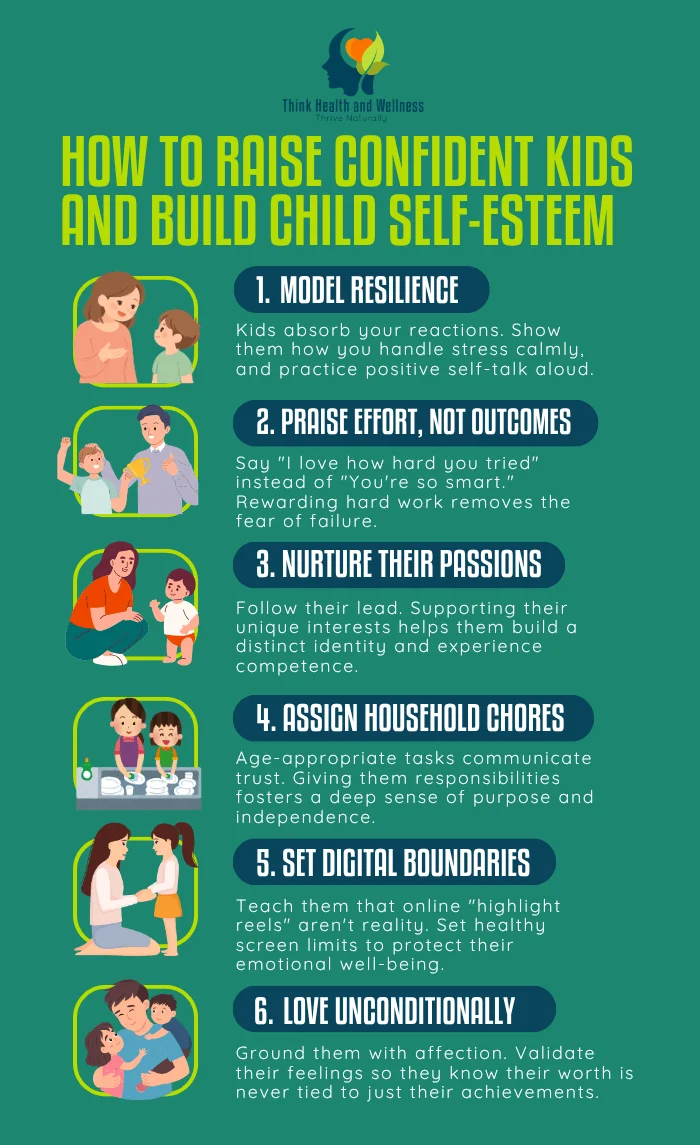
Children are incredibly observant; they absorb our actions, reactions, and words like sponges. One of the most effective ways you can help build your children's confidence is through modeling. Kids see how you handle stress, how you talk about yourself, and how you approach new challenges.
Be an Example of Optimism and Perseverance
If you want your kids to be resilient, they need to see you being resilient. When you make a mistake—whether it is burning dinner, losing your keys, or facing a setback at work—pay attention to how you react. Do you berate yourself, or do you take a deep breath and find a solution?
Verbalize your problem-solving: "I am frustrated that I messed up this recipe, but I am going to try again and figure out what went wrong."
Show self-compassion: Avoid speaking negatively about your body, your intelligence, or your abilities in front of your children.
Embrace the unknown: Let kids see you try new things, even if you aren't perfectly confident enough at first.
By modeling optimism and perseverance, you teach your child that perfection is an illusion and that effort is what truly matters. This way to help is organic; it simply requires you to instill positive things into your own daily self-talk.
Encourage Resilience: How Praising Effort Helps Kids Try New Things
Failure is an inevitable part of life, but it is often deeply uncomfortable for parents to watch their children struggle. However, protecting kids from every potential failure robs them of the opportunity to develop resilience. To raise confident kids, parents must reframe how the family views mistakes.
Praise the Process, Not Just the Outcome
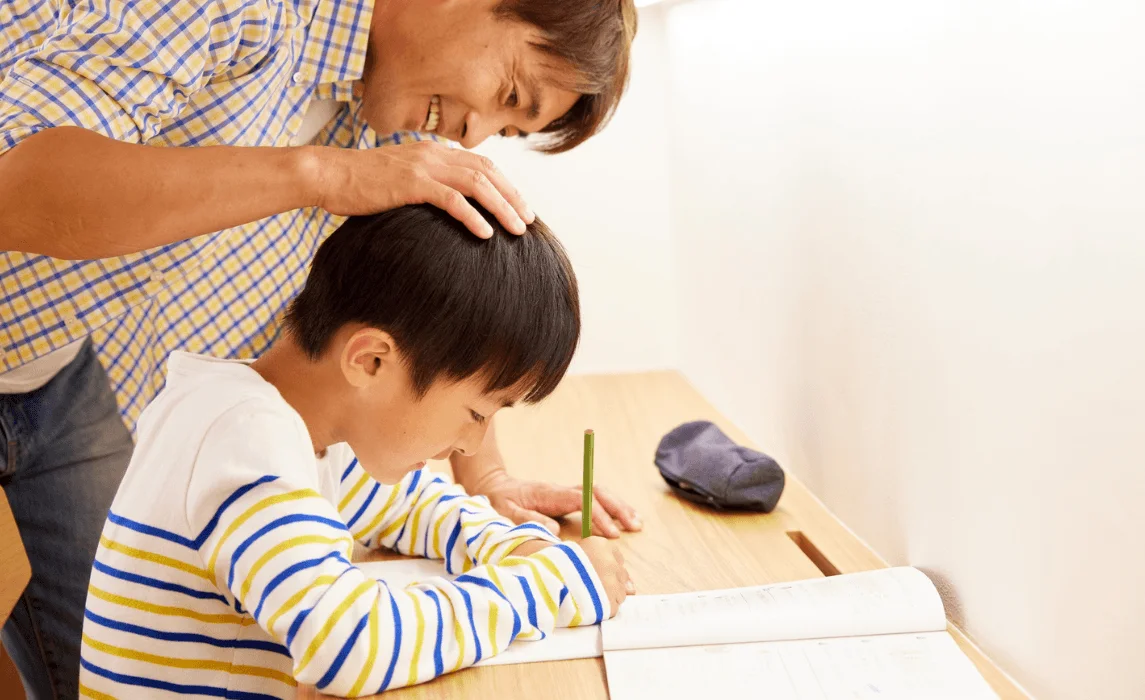
When we only praise the final result ("You got an A!" or "You scored the winning goal!"), we inadvertently teach kids that their worth is tied directly to their achievements. When they eventually fall short—which is guaranteed, win or lose—their self-esteem takes a massive hit.
Instead, shift your focus to the effort, the strategy, and the perseverance.
"I saw how hard you worked on that math problem. You didn't give up!"
"I love the way you practiced your lines for the play every single night."
This specific kind of praise helps kids internalize the idea that hard work is valuable. It teaches them that a setback is merely a learning opportunity, not a reflection of their permanent abilities. When you praise the process, you give your child the courage to try new things because the fear of failure is removed.
Nurture Passions to Help Your Child Gain Confidence
Every child is unique, possessing their own set of interests, quirks, and talents. One of the most fulfilling parts of parenting is helping your child discover what makes them light up. A key tip to boost a child's confidence is to support them in exploring these interests and setting realistic goals.
Cultivating Identity Through Action
Whether your child loves painting, playing soccer, building robots, or learning about dinosaurs, encouraging their passions helps them build a distinct identity.
Follow their lead: Let the child first dictate their interests. Do not force them into an activity just because it is what you did at their age.
Set achievable goals: Break down larger ambitions into manageable steps. If they want to learn to play a song on the piano, help them focus on mastering one chord at a time.
Celebrate small wins: Every milestone reached provides a tangible boost to their self-confidence.
Pursuing passions allows a child to experience competence. When they realize, "I practiced, and now I am getting better at this," they gain confidence that bleeds into other areas of their lives.
Build Confidence and Independence with Age-Appropriate Chores
A highly effective, yet often overlooked, method for building confidence is giving kids responsibilities around the house. From the time they are a toddler to when they enter kindergarten and beyond, contributing to the household gives kids a sense of belonging and purpose.
Why Responsibilities Foster Self-Worth
When you entrust your child with a chore, you communicate a powerful message: "I trust you, you are capable, and we need your help." This makes children feel valued within the family unit.
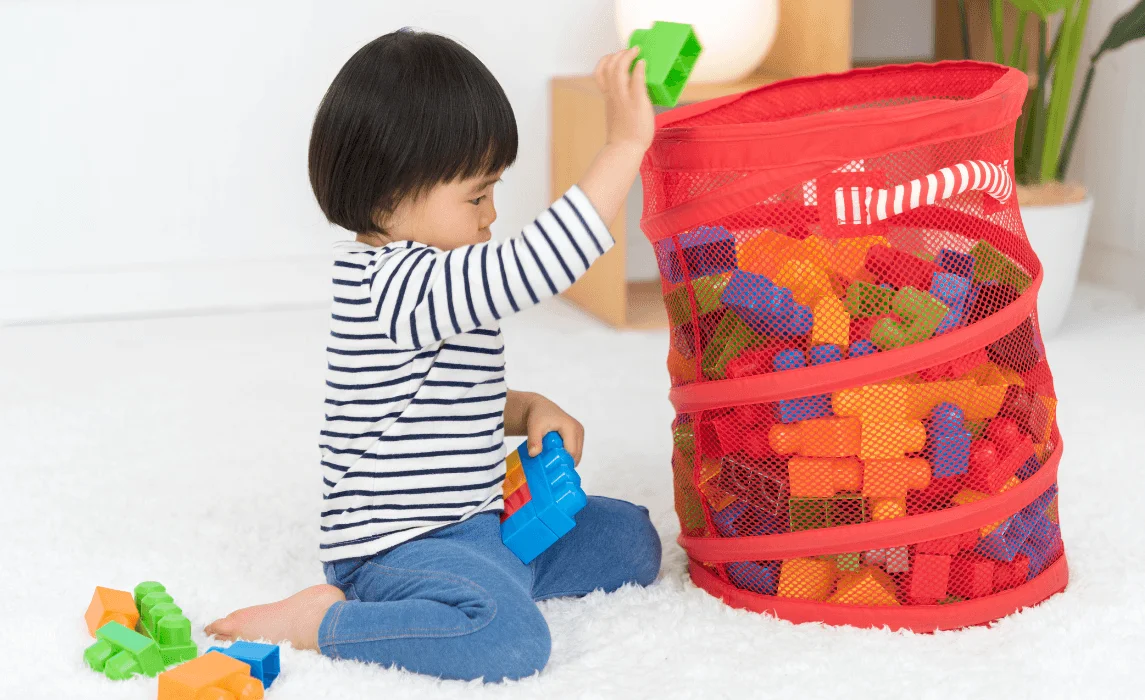
Toddlers: Can put their toys in a bin, throw away trash, or put dirty clothes in a hamper.
Kindergarteners: Can help set the table, match socks, or feed a family pet.
Older Children: Can fold laundry, load the dishwasher, or help prepare simple meals.
Teaching kids to manage tasks fosters independence. Make sure the tasks are age-appropriate so they are challenging but achievable. When children know they are capable of taking care of their environment, they naturally feel confident navigating the world outside their home.
Teach Kids Self-Compassion and Set Healthy Boundaries in a Digital World
In today's fast-paced, hyper-connected society, raising confident children requires addressing the unique challenges of the digital age. Children are frequently bombarded with curated, unrealistic images of other people's lives, which can easily trigger social comparisons and feelings of inadequacy.
Merging Self-Compassion with Media Literacy
To protect a child’s self-esteem, parents must actively teach self-compassion and critical thinking.
Normalize Imperfection: Remind your child that what they see online is a highlight reel. Teach them to be gentle with themselves when they feel they don't measure up.
Emotional Regulation: Screen time can leave a child feeling overstimulated and anxious. Help your child learn to identify when they need a break from technology to regulate their emotions.
Establish Safe Boundaries: Work together to set healthy limits on screen time and social media usage. Explain the "why" behind the rules so they understand it is about protecting their well-being, not just restricting their fun.
When children are encouraged to make their own decisions within safe, parent-guided boundaries, they develop a robust sense of self-reliance. This approach helps them articulate their boundaries to others, ensuring they expect to be treated with respect both online and offline.
Show Unconditional Love to Raise Confident Kids
All the strategies, activities, and boundary-setting in the world cannot replace the most fundamental building block of a child's confidence: unconditional love. For a child to truly thrive, they must know that your love for them is not contingent on their grades, their behavior, or their successes.
The Power of Validation and Connection
As Eileen Kennedy-Moore, a respected Ph.D. in child psychology often notes, children need to feel securely attached to their caregivers to explore the world confidently.
Physical Affection: Never underestimate the power of a simple hug or a cuddle. Physical comfort reassures a child that they are safe and loved.
Active Listening: When your child is upset, validate their feelings before rushing in to fix the problem. Saying, "I can see why that made you feel sad," shows children to show empathy to themselves.
Consistent Positive Messaging: Make sure your child hears positive things about who they are as a person, not just what they do. "I love your sense of humor," or "You have such a kind heart."
When a child feels profoundly loved and accepted at home, they carry that security with them wherever they go. It acts as an emotional armor against the harsh realities of the world.
Raising a confident child does not require a perfect plan. It takes steady, daily work. You must build their belief in themselves. Confidence grows slowly. It builds when you lead by example. It deepens through praise and close connection.
Find a rhythm that fits your family. Accept the hard days. Life will get messy. You will face loud tantrums, clear failures, and sharp doubt. Both you and your child will struggle at times.
Treat every mistake as a chance to learn. Push your child to stand on their own. Ground your bond in steady, endless love. These simple acts lay a firm base.
Trust the process. Your everyday choices matter. Your calm patience and your steady presence do the heavy lifting. They give your child the power to grow tough, happy, and bold.
Q: What are the red flags of low self-esteem in a child?
A: Red flags can include frequent negative self-talk (e.g., "I'm stupid," "I can't do anything right"), extreme fear of failure leading to avoidance of new activities, withdrawing from friends or social situations, giving up easily on tasks, and an inability to accept compliments.
Q: How can I help my toddler gain confidence?
A: Focus on letting them make simple choices (e.g., "Do you want the red cup or the blue cup?"), providing them with safe opportunities to explore their environment, praising their efforts when they try to dress themselves or build a block tower, and offering plenty of physical affection and reassurance.
Q: What is the best way to help a child who is being bullied?
A: First, listen to them without interrupting and validate their feelings. Ensure they know it is not their fault. Role-play assertive responses, help them communicate with teachers or school counselors, and focus on reinforcing their self-worth at home so they do not internalize the bully's narrative.
Q: Does over-praising my child hurt their confidence?
A: Yes, it can. If praise is excessive, insincere, or focused purely on outcomes and innate traits (like "You're the smartest kid in the world"), it can create pressure. Children may become afraid to fail and lose their "smart" status. Stick to genuine, specific praise focused on effort and strategy.
Q: How do chores actually help kids feel confident?
A: Chores show a child that they are a capable, contributing member of the household. It moves them from being solely a receiver of care to an active participant in the family’s well-being, which directly boosts their independence and self-worth.